What Is a Tulip Joint?
A tulip joint consists of two parts: the head (a paper cone packed tight with ground cannabis) and the stem (a regular, slim joint with a filter). The cone is sealed at the top by twisting the excess paper, and its narrow base is inserted into the open end of the stem. When you draw through the filter, smoke travels through the stem, up through the connection point, and through the entire cone.
The tulip burns for a long time — longer than a standard joint of the same total weight — because the cone-shaped head burns from the top down, with the paper acting as a slow-burning wick. The shape also means the first few draws are particularly rich, as the twisted top ignites and the full surface area of the cone is slowly consumed.
Step 1 — What You'll Need
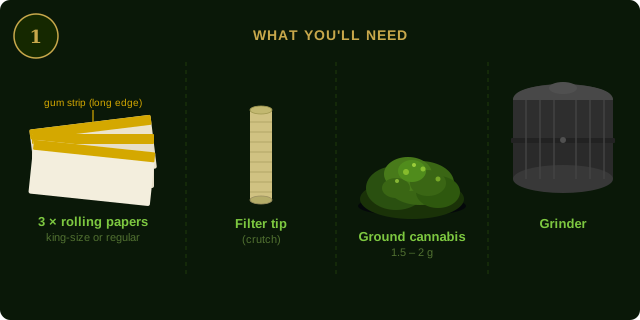
Three standard rolling papers (or two king-size papers), one filter tip, approximately 1.5 to 2 grams of well-ground cannabis, and a grinder. A flat surface helps when joining the papers. Keep an extra paper nearby — you will use its gum strip to seal the connection point.
Step 2 — Join Two Papers Into a Wide Sheet
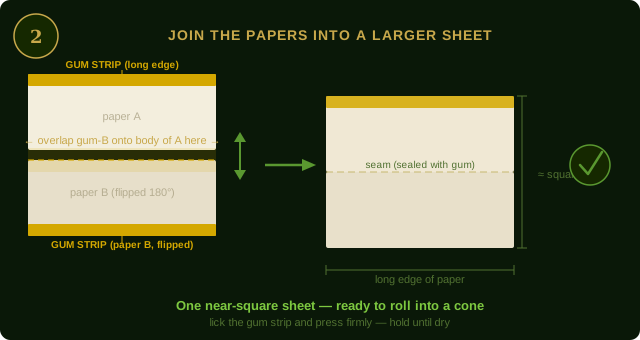
Take two of your papers and lay them flat. Overlap one paper's gum strip against the non-gum edge of the other, creating a single wide square sheet. Lick the lower gum strip and press the papers together firmly along the join. Hold for a few seconds and let the bond dry completely before moving on — a weak join will come apart when you roll the cone.
If you are using king-size papers, two papers joined width-wise will give you a sheet large enough for a generous tulip head. With standard papers, two joined this way produce a slightly smaller head, which is still perfectly functional.
Step 3 — Roll the Wide Sheet Into a Cone
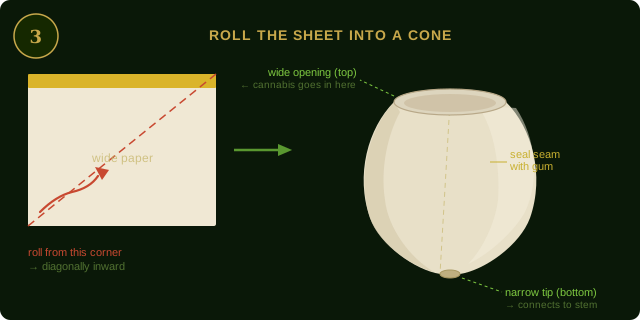
Hold the joined sheet by one corner and begin rolling it diagonally toward the opposite corner. The rolling motion creates a cone that tapers to a narrow point at one end (this will be the bottom, connecting to the stem) and opens wide at the other (the top, where you'll fill it with cannabis).
Once you have the cone shape, use the gum strip to seal the seam. Work along the seam carefully, pressing it down as you go. Set the cone upright with the wide opening at the top and the tip pointing down, and check that the seal is tight all the way along.
Step 4 — Fill the Cone and Twist the Top Shut
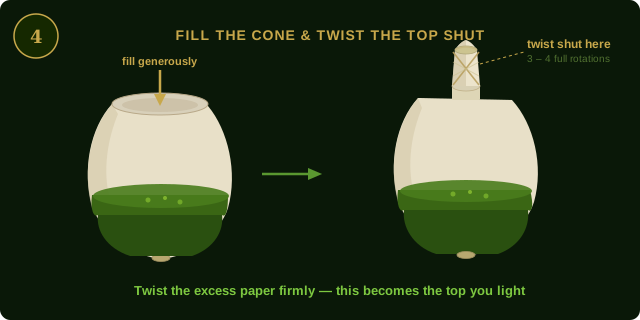
Hold the cone upright — tip pointing down, wide mouth pointing up. Pour your ground cannabis in through the wide opening, gently tapping the side of the cone to settle the material as you fill. Pack the cone to roughly 80% full; overfilling makes twisting the top difficult.
Once filled, gather the excess paper at the wide top and twist it shut firmly. Give the twist two or three full rotations — a tight twist holds the cannabis in and acts as the burn point when you light the tulip. This twisted top is what gives the finished joint its characteristic tulip-flower appearance.
Step 5 — Roll the Stem Joint
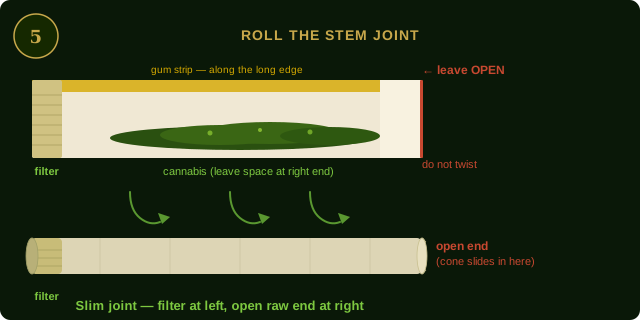
Roll a regular slim joint using your third paper and the filter tip. Place the filter at one end and distribute a small amount of cannabis along the paper. Roll as you would a standard joint — but do not twist the open end. Leave the non-filter end open so that the cone can be inserted into it in the next step. The stem should be slightly narrower than you might normally roll, since it needs to accept the gathered base of the cone.
Step 6 — Connect the Cone to the Stem
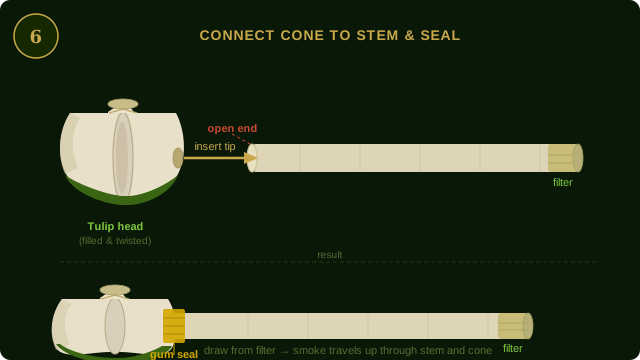
Gather and lightly twist the paper at the narrow base of your filled cone. Open the non-filter end of the stem joint slightly, and push the gathered cone base into it. The cone should sit firmly in the mouth of the stem. Once positioned, tear the gum strip from your spare paper, lick it, and wrap it around the connection point to create an airtight seal. Press the gum firmly around the join and let it dry.
Give the tulip a gentle tug to confirm the cone is secure. The finished joint should hold together as a single piece with the cone sitting upright on the stem.
The Finished Tulip
When complete, the tulip joint has its distinctive flower silhouette: a rounded, bulging head that narrows at the twisted top, mounted on a straight stem with the filter at the bottom. Hold it by the stem, light the twisted top evenly, and draw slowly through the filter.
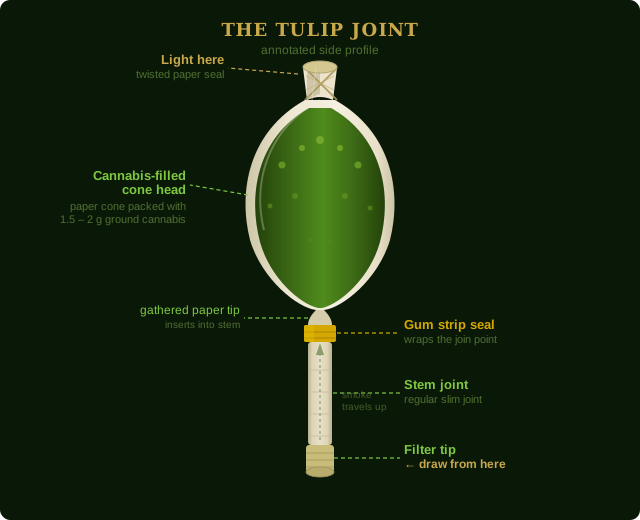
The first draws will be rich and full as the top begins to burn. The cone burns progressively from the top down, delivering a long, even smoke. A well-rolled tulip with 1.5–2g of quality cannabis will provide a session of 15–25 minutes — considerably longer than a standard joint of the same weight.
Tips for a Better Tulip
Grind finely but not to dust. Too coarse and the cannabis will not pack into the cone well. Too fine and it may draw through the stem. A medium-fine grind is ideal.
Let each gum strip dry fully before stressing the join. Rushing this step is the most common cause of a tulip falling apart mid-smoke.
Roll the stem slightly loose. A slightly looser stem draw means the cone has less resistance to overcome. A very tightly rolled stem can make the tulip hard to draw from once the cone resistance is added.
Light the twist evenly. Rotate the tulip slowly while lighting to catch the full circumference of the twisted paper. An uneven light will cause the cone to burn on one side only.